How Accurate Is an AI Attractiveness Test? What the Score Really Means
A practical guide to photo quality, model consistency, privacy, and the limits of treating an AI face score as an objective answer.
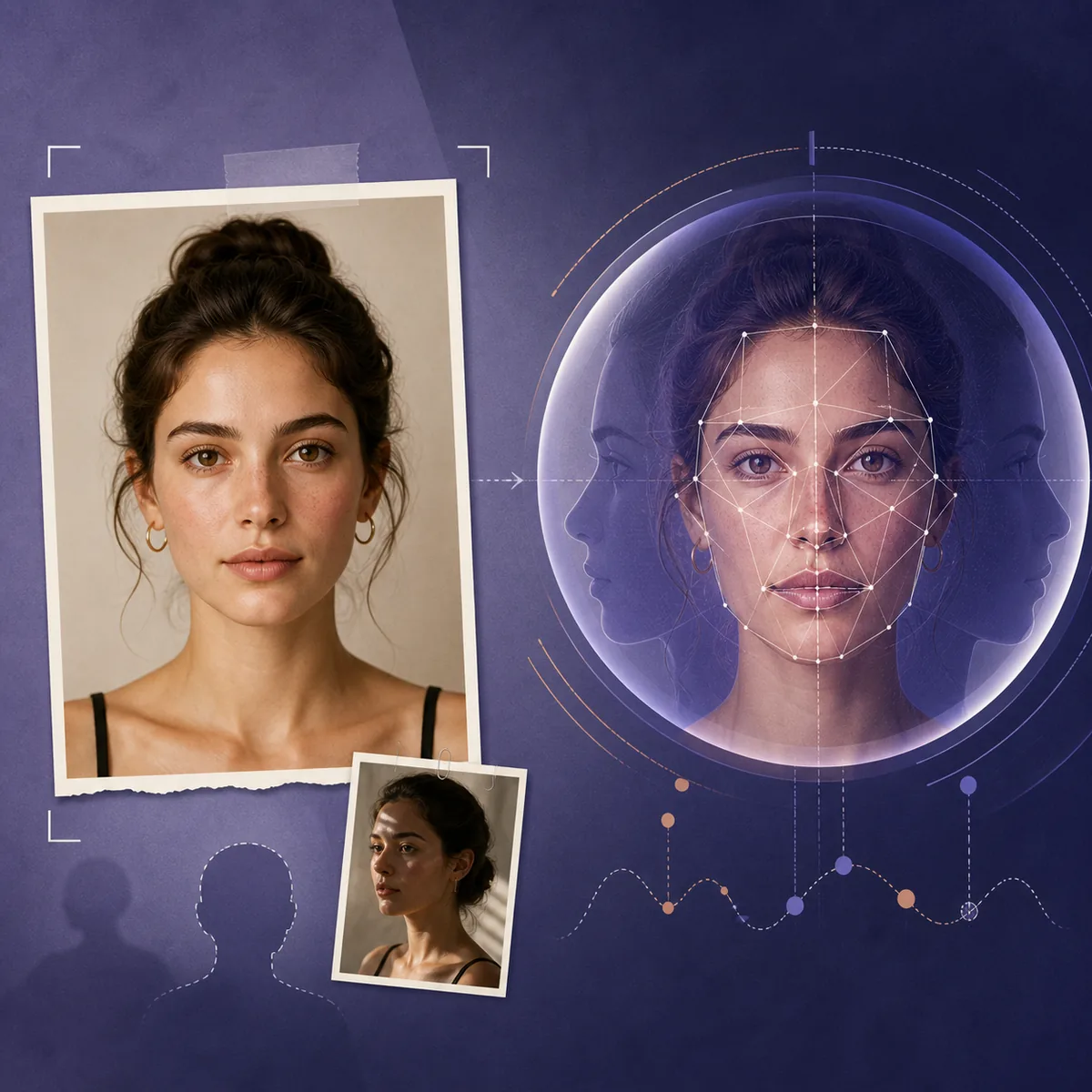
Reviewed by
Attractiveness Test Editorial Team
A product-focused editorial team writing about AI face analysis, photo selection, and responsible use of attractiveness scores.
Editorial note
An AI attractiveness score is best treated as directional feedback about one image. It is not a universal measurement of a person, and there is no single ground-truth number that every model should reproduce.
Quick answer: how accurate is an AI attractiveness test?
How accurate is an AI attractiveness test? It can be useful for consistent photo feedback, but it is not accurate in the same way a ruler or a laboratory measurement is accurate. An AI attractiveness test reads one image through one model's learned patterns. The result can help you compare lighting, framing, expression, and presentation, but it cannot establish an objective level of human attractiveness.
The most trustworthy way to use a score is to keep the input conditions similar, look for patterns across more than one photo, read the explanation alongside the number, and treat a small difference as noise. If a result changes sharply because of a crop, shadow, angle, filter, or a different model, that is evidence of model and image sensitivity rather than a sudden change in you.
What does accuracy mean for an AI attractiveness test?
The word accuracy hides several different questions. A tool may be consistent when it sees the same photo twice, useful when it compares two similar portraits, or persuasive because its explanation sounds detailed. None of those properties proves that the score is an objective measurement of attractiveness in everyday life.
For a face-rating tool, a better question is: accurate for what job? If the job is choosing between two profile photos, stable feedback about crop, lighting, and expression may be enough. If the job is deciding how attractive a person is across every context, the task is too broad for a single image and a single model. Human preferences, social context, culture, movement, voice, style, and chemistry are outside the score.
A responsible interpretation therefore separates prediction from truth. The model predicts a score or description from visible pixels. You decide whether that feedback is relevant to the photo decision you actually have.
Six signs that the result is being used carefully
- A defined task: The page explains whether it rates one image, compares photos, describes visible features, or offers entertainment rather than a validated measurement.
- Comparable inputs: The photos have similar distance, crop, lighting, resolution, and expression when the goal is comparison.
- Context with the number: The output explains visible factors instead of presenting a decimal score without any interpretation.
- Repeatability: Small changes do not create dramatic swings, or the tool clearly tells you why the result is sensitive to the input.
- Honest limits: The page does not claim to measure personality, worth, dating success, health, or universal beauty from a portrait.
- Clear photo handling: The service gives enough information for you to decide whether uploading a face photo is appropriate for your situation.
Why do AI attractiveness scores change between photos and models?
A score is produced from an interaction between the image and the model. Change the image, and you change the evidence available to the model. Change the model, and you change the patterns, training examples, thresholds, and wording used to interpret that evidence. Even when two tools use the same photo, they may be answering slightly different questions.
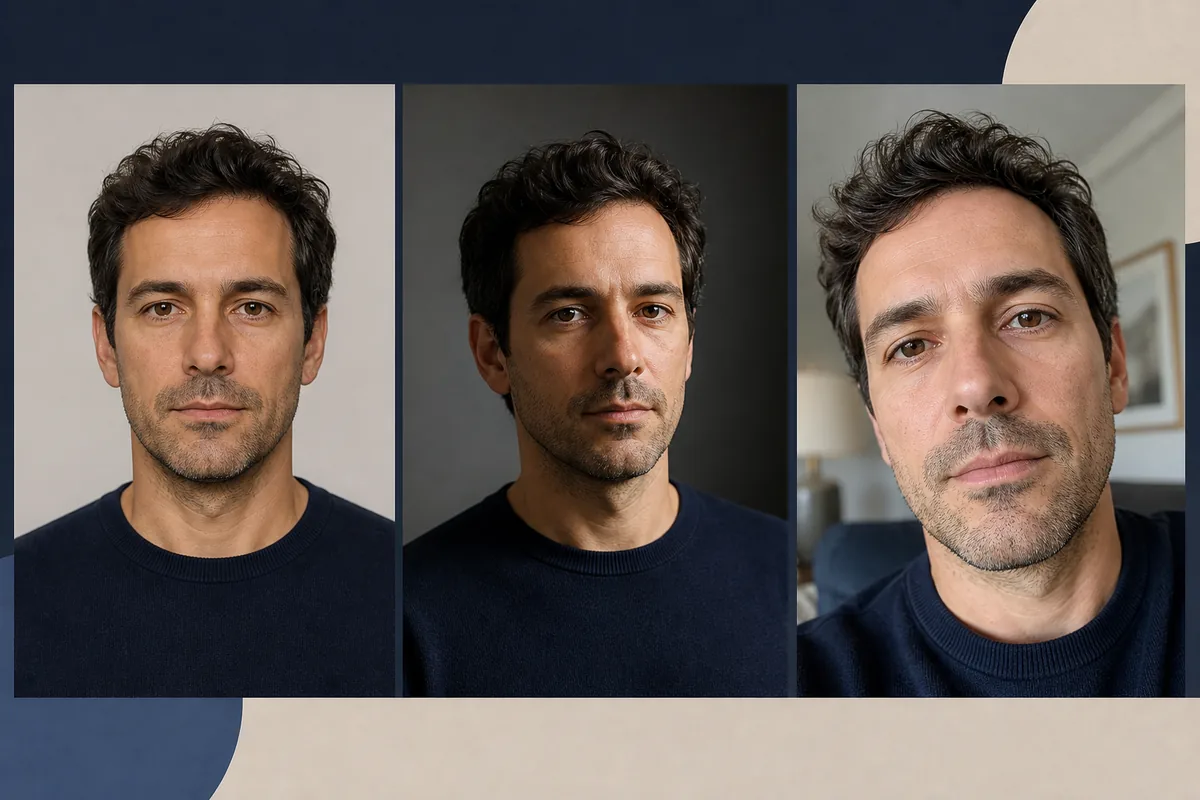
Photo quality is often the easiest source of variation to see. A close wide-angle selfie can exaggerate the center of the face; a side angle can hide one eye or change the visible jawline; a hard shadow can make one side look less legible; and a filter can remove texture the model would otherwise read. These changes affect the presentation of the image before any score is produced.
The table below separates useful photo feedback from claims that go beyond what a static image can support.
| Use case | Useful signal | What it cannot prove | Better interpretation | |
|---|---|---|---|---|
| Photo quality | Lighting, focus, crop, and face visibility | Whether the submitted image is easy for a model to read | Not a complete rating of the person | Improve the photo before comparing scores |
| Two-photo comparison | Choosing between similar portraits | Which image presents more consistent visible cues | Not a universal ranking | Keep camera distance and framing similar |
| Model comparison | Seeing how tools explain the same image | Differences in model output and emphasis | Not proof that one model is objectively correct | Different tools may measure different things |
| Real-world attraction | Very limited directional context | A constrained response to a static photo | Not personality, chemistry, or social outcome | Do not treat the score as a life prediction |
What can an AI attractiveness score actually tell you?
The narrowest useful interpretation is usually about the submitted photo: how clearly the face is visible, how the framing presents the features, and how the model's learned visual patterns respond to that particular image. That can be useful when you are selecting a profile picture or checking whether a portrait is well lit.
The interpretation becomes weaker when you compare unrelated photos, compare different tools, or treat a small numerical difference as meaningful. A score of 7.8 versus 8.1 may look precise, but the extra decimal places do not prove extra certainty. If the result changes after a small crop or expression change, use the explanation and the visual context rather than ranking yourself by the number.
It is also important to avoid turning a model output into a claim about identity or value. A score cannot tell you how kind, interesting, confident, compatible, or attractive you will seem to a particular person. It describes a constrained model response to a constrained image.
| Scenario | What it may tell you | What it does not tell you |
|---|---|---|
| The same photo gets a similar result twice | The workflow may be reasonably repeatable for that input | That the score is universally accurate |
| A brighter, clearer photo scores differently | Image presentation affects the model response | That your underlying appearance changed |
| Two tools disagree | Models use different patterns or scoring conventions | Which tool has discovered the final truth |
| A score is close to another score | The images may be practically similar for the chosen task | That a decimal difference has social meaning |
Privacy, dataset, and bias limits matter as much as the score
Accuracy is not only a question of whether a number feels plausible. It also depends on whose images shaped the model, which visual conventions the model learned, and whether the service makes its processing and retention practices clear. A result can be internally consistent while still reflecting a narrow dataset or a particular cultural preference.
Do not assume that a detailed face analysis has permission to infer sensitive facts. A portrait can contain more information than you intended to share, and a third-party service may have policies that differ from the tool you are using here. Read the relevant privacy notice, avoid uploading another person's image without permission, and do not use a beauty score as a proxy for health, age, personality, or social worth.
If a page promises universal objectivity, perfect accuracy, or a score that predicts real-life outcomes, treat that language as a warning. Good editorial guidance makes the uncertainty visible instead of hiding it behind a polished result.

Questions to ask before uploading a face photo
- What is stored?: Look for a plain-language explanation of temporary processing, retention, deletion, and whether images are used for another purpose.
- Who is in the photo?: Use only images you have permission to process. Group photos and images of other people create consent and identification problems.
- What is the model claiming?: A score about visible presentation is very different from a claim about health, personality, identity, or future outcomes.
- What happens if the result is upsetting?: Keep the test optional and step away from the number if it starts to replace your own judgment or affect your wellbeing.
How to compare AI attractiveness results without chasing a number
If you still want to test a photo, use a small, controlled workflow. The goal is not to find the highest possible score. The goal is to learn whether the feedback is stable enough to answer a practical question, such as which of two profile photos is clearer and more natural.
Use the same question and similar images. Record what changed between photos. Then review the pattern instead of reacting to one result. This approach makes it easier to spot a camera or lighting issue and harder to mistake random variation for a personal verdict.
- Define the decision: Decide whether you are comparing profile pictures, checking image clarity, or simply exploring how a model responds. Keep the question narrow.
- Choose two or three comparable photos: Prefer one person, similar distance, similar crop, natural expression, and enough resolution to see the face without extreme filters.
- Run the same input through the same workflow: Do not change the prompt, tool, crop, or output format halfway through the comparison.
- Read the explanation before the score: Check whether the feedback refers to visible image conditions such as light, angle, focus, or framing.
- Treat close results as a tie: A small gap is usually not a reason to make a strong claim. Choose the photo that feels authentic and fits the context.
- Stop when the question is answered: Repeated testing can turn useful feedback into score chasing. Keep the practical decision more important than the number.
For a direct photo-based workflow, you can use Face Rating AI to compare a small set of clear portraits, then read the result alongside the image rather than treating it as a final judgment.
Red flags that make an AI attractiveness test less trustworthy
A polished interface does not guarantee a reliable measurement. The strongest warning signs are claims that are broader than the input can support or that make uncertainty impossible to see. These patterns do not prove that a tool is malicious, but they are good reasons to slow down and check the page's purpose, privacy language, and limitations.
When in doubt, choose the interpretation that makes the fewest unsupported claims. A useful photo note is more credible than a promise to reveal your objective worth.
- Perfect accuracy claims: No single portrait model can guarantee a universal, context-free attractiveness judgment.
- Large swings from tiny edits: A dramatic change after a small crop, filter, or lighting adjustment suggests sensitivity that needs explanation.
- No privacy explanation: If the page does not explain basic image handling, pause before uploading a personal photo.
- Sensitive conclusions: Beauty scoring should not be presented as medical, psychological, identity, or relationship prediction.
- One number with no context: A bare score gives you little ability to understand what the model saw or how to use the result responsibly.
FAQ about AI attractiveness test accuracy
Further reading and policy context
These references provide context for evaluating model limitations and first-party photo handling. They do not prove that any particular attractiveness score is objectively correct.
- NIST Face Recognition Technology Evaluation: Demographic Effects: Useful context for why model evaluation should consider demographic variation; it is not an attractiveness-score validation.
- Attractiveness Test privacy policy: Read the site's own explanation before uploading an image.
Use the score as feedback, not a verdict
If your practical question is which portrait is clearer or more useful, a controlled photo comparison can help. Keep your expectations narrow, protect other people's images, and remember that the most important information is often visible in the photo itself.
Start with a clear image, compare only a few realistic options, and stop when the decision is clear.