Physical Attractiveness Test: What It Measures and What It Misses
Learn how physical attractiveness is measured, why a photo score is only one slice of attraction, and how to use results without turning a number into a verdict.
Reviewed by
Attractiveness Test Editorial Team
An editorial team writing about appearance technology, photo feedback, and responsible interpretation of attractiveness scores.
Editorial note
A physical attractiveness test can describe a rating task or a photo-based estimate. It cannot produce a universal measure of a person's worth, personality, or real-life appeal.
Quick answer: what does a physical attractiveness test measure?
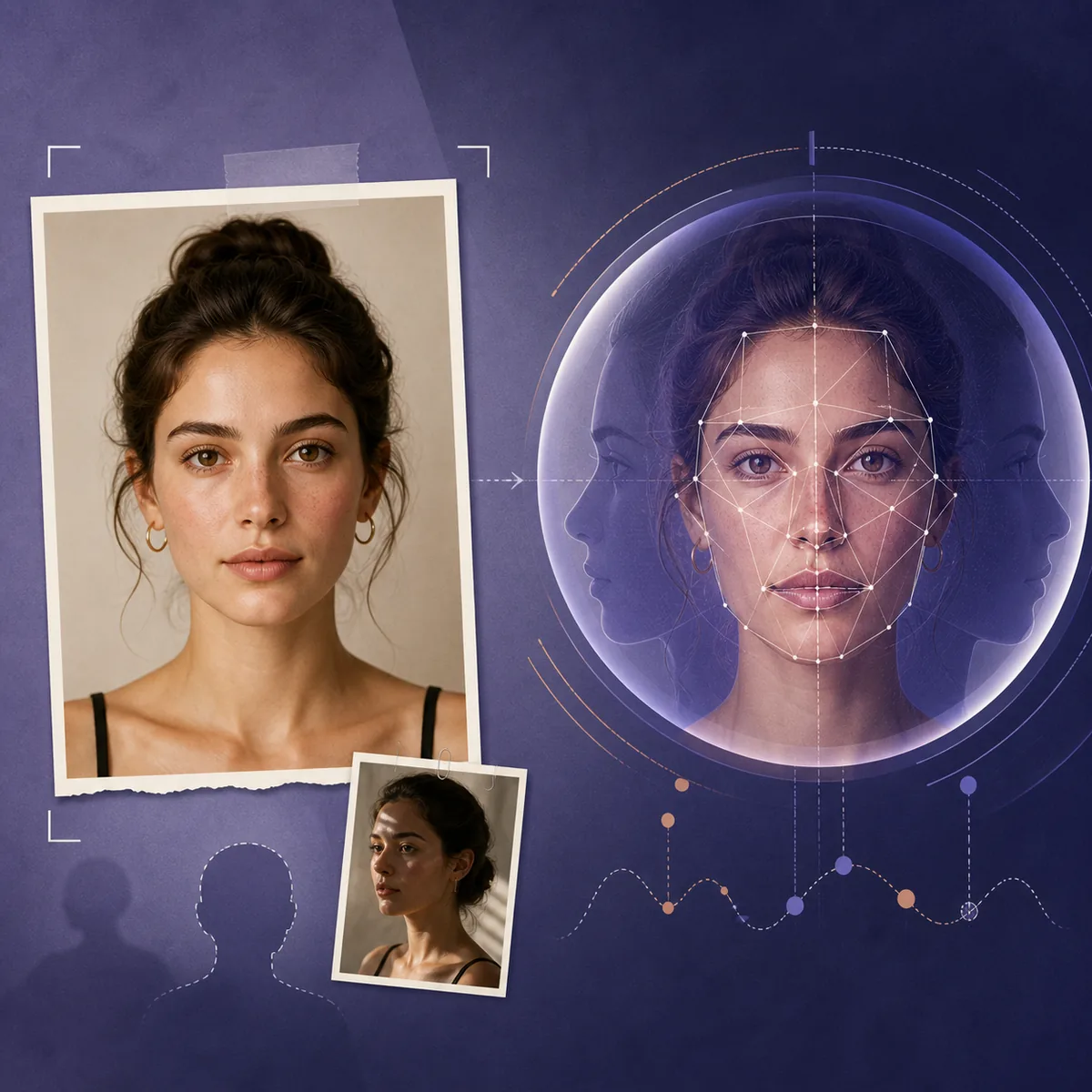
A physical attractiveness test usually asks someone to rate appearance, or uses a photo system to estimate how a face or body aligns with a chosen set of visual patterns. Research commonly separates self-ratings, ratings by unfamiliar people, partner ratings, and ratings from photos, audio, or video. Those are different tasks, so their results should not be treated as interchangeable.
A score can be useful when the question is narrow: How do people rate this photo under these conditions? It is not a complete answer to How attractive am I? Real-world attraction also includes expression, voice, movement, grooming, style, context, personality, and the preferences of the person looking. Use a test to understand a limited signal, then keep the limitation visible.
What is a physical attractiveness test?
The phrase physical attractiveness test can describe a research questionnaire, a human rating task, a photo comparison, or an AI face-rating page. The shared idea is that a person or system turns an impression of appearance into a label, scale, rank, or explanation. Before reading a result, identify which task actually happened.
This distinction matters because the same word, attractiveness, can hide different questions. A test about facial balance is not a test of social warmth. A dating-photo comparison is not a population study. A self-rating reveals self-concept as well as appearance. Clear labeling makes the result easier to use and harder to overclaim.
Four questions to ask before trusting a result
- Who is doing the rating?: You, a partner, unfamiliar viewers, a trained panel, or a computer model may produce different kinds of evidence.
- What can the input show?: A headshot, full-body photo, audio clip, video, or in-person meeting exposes different appearance and behavior cues.
- What scale is used?: A 1-10 score, a pairwise choice, a percentile, and a written description are not equivalent outputs.
- What decision will it support?: Choosing a profile photo is a smaller and safer question than ranking a person or predicting relationship success.
How physical attractiveness is measured
Research on physical attractiveness commonly separates the target of the judgment from the observer and the way the target is presented. A self-rating asks what you think about your own appearance. A partner rating asks how one person sees someone they know. A photo-rating task asks unfamiliar viewers to judge a controlled image. Voice, video, and in-person methods add signals that a face photo cannot provide.
A useful comparison therefore describes the measurement channel before it describes the score. Two studies can use the same 1-7 scale and still answer different questions if one uses edited headshots and the other uses live interaction. Likewise, two tools can call their output an attractiveness score while measuring different facial landmarks, reference ranges, or learned preferences.
| Format | Best for | What it records | Context question | Main limitation |
|---|---|---|---|---|
| Self-rating | Studying self-concept and body image | How you judge your own appearance | How do mood, comparison, and social pressure affect the answer? | It is not a direct measure of how others see you |
| Photo-rating panel | Comparing controlled portraits | Ratings or choices from unfamiliar viewers | Who are the raters and what instructions did they receive? | A photo hides movement, voice, context, and chemistry |
| Partner rating | Understanding attraction within a relationship | A known person's view of a partner | Was the rating voluntary and emotionally safe? | It is relationship-specific and not a population norm |
| Voice or video rating | Adding expression and behavior cues | Appearance plus selected sensory or social signals | What identifying data is captured and stored? | It still samples one context and one observer group |
How to interpret a physical attractiveness test result
Start by restating the result in the narrowest accurate sentence. For example: This group rated this portrait higher on this scale under these instructions. That sentence is less dramatic than I am a 7, but it is more faithful to the evidence. It keeps the image, audience, scale, and conditions in view.
Finally, separate description from advice. A test can describe where a photo sits on a chosen scale. It cannot prove that you should change your face, body, identity, or personality. Practical decisions should include your purpose, comfort, consent, and the people you hope to reach.
| Scenario | What it can tell you | What it cannot tell you |
|---|---|---|
| One clear portrait | How this image was read on one chosen scale | A permanent rating of your face or body |
| Different communities | How preferences may vary by audience and setting | One culture's average as a universal rule |
| In-person interaction | A richer mix of appearance, behavior, voice, and context | A simple score that explains the whole relationship |
Why context, culture, and bias matter
Physical attractiveness judgments are shaped by observers, situations, and cultural expectations. A study can find an average preference in one sample without proving that the preference is universal. The people who rated the images, the images selected, the instructions, and the surrounding social context all affect what the number represents.
Treat context as part of the result. Ask whose preferences are represented, whether the sample matches your intended audience, and whether the tool explains uncertainty. If the result affects how you feel, reduce repeated testing and return to a concrete decision such as choosing one clear, authentic photo.

Context checks that improve interpretation
- Check the reference group: Look for information about who rated the images or whose data shaped the model.
- Name the setting: A dating profile, professional headshot, and research portrait can prioritize different signals.
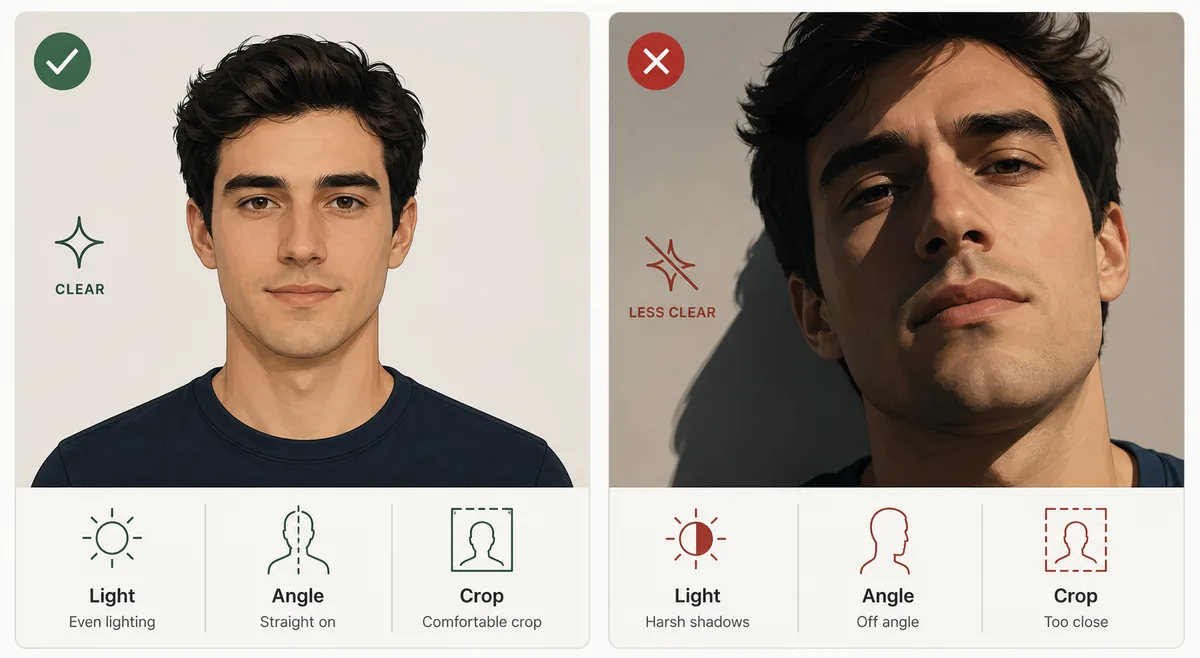
- Control the photo: Keep lighting, camera distance, crop, and expression comparable when comparing images.
- Protect consent and privacy: Use your own image or obtain permission; remove documents, children, and identifying background details.
A practical no-AI physical attractiveness test workflow
You can learn something from a small human comparison without pretending it is a universal beauty test. Keep the question specific, the materials consistent, and the number of ratings modest. The goal is to gather perspective, not to outsource your self-worth to a panel.
For a profile-photo decision, ask a few trusted adults to compare two or three realistic images using the same prompt. Ask them to explain which image feels clearer, warmer, or more appropriate for the setting. Written reasons are more actionable than a bare score.
- Define one decision: Choose a question such as which photo is clearest for a professional profile, rather than asking for a total ranking of you.
- Prepare comparable images: Use similar crops and image quality, and remove private background details that are not needed for the decision.
- Use neutral instructions: Ask raters to focus on visible presentation and explain their choice without insults, identity guesses, or medical claims.
- Collect reasons with the rating: Record whether light, expression, framing, clothing, or approachability influenced the choice.
If you want an AI photo score, use the site's Face Rating AI page as a separate, clearly labeled tool. Read its input and privacy guidance first, and compare only a few consistent images.
Limits and healthier questions
A physical attractiveness test becomes misleading when it promises a universal ranking, hides its reference group, or treats a narrow photo measurement as a complete personality or relationship forecast. It is also a poor fit for diagnosing health, predicting behavior, or deciding whether someone deserves respect.
A better question usually names the context and the action. Instead of What is my true score?, ask Which image communicates my goal clearly? Instead of What feature is wrong?, ask What can I adjust in this photo without changing who I am? Those questions keep the result useful and bounded.
- A single number is not a ground truth: A score summarizes one method, sample, image, and moment; it does not settle every observer's preference.
- Geometry is not character: Facial proportions or body measurements cannot establish personality, kindness, competence, or relationship quality.
- Average preference is not a rule: Group averages can hide individual, cultural, and situational differences.
- Precision can be misleading: A decimal or percentile may look scientific even when the input is blurry, biased, or poorly matched to the reference group.
Physical attractiveness test FAQ
Research context
The definitions and measurement distinctions in this guide are grounded in the following source; the source does not validate any particular commercial score.
- What influences judgments of physical attractiveness? A comprehensive perspective with implications for mental health: Reviews self-, partner-, photo-, and voice-based ratings and explains why attraction is broader than a still-image judgment.
Want to compare a real photo?
Use a clear, single-person image and keep the question narrow. A photo tool can help you compare presentation choices when you remember that the result describes one image, not your whole identity.
For an upload-first workflow, open Face Rating AI. For the meaning of a score, continue with the site's broader AI guide and photo comparison guide.