魅力度スケール解説:1〜10の美容スコアは何を意味する?
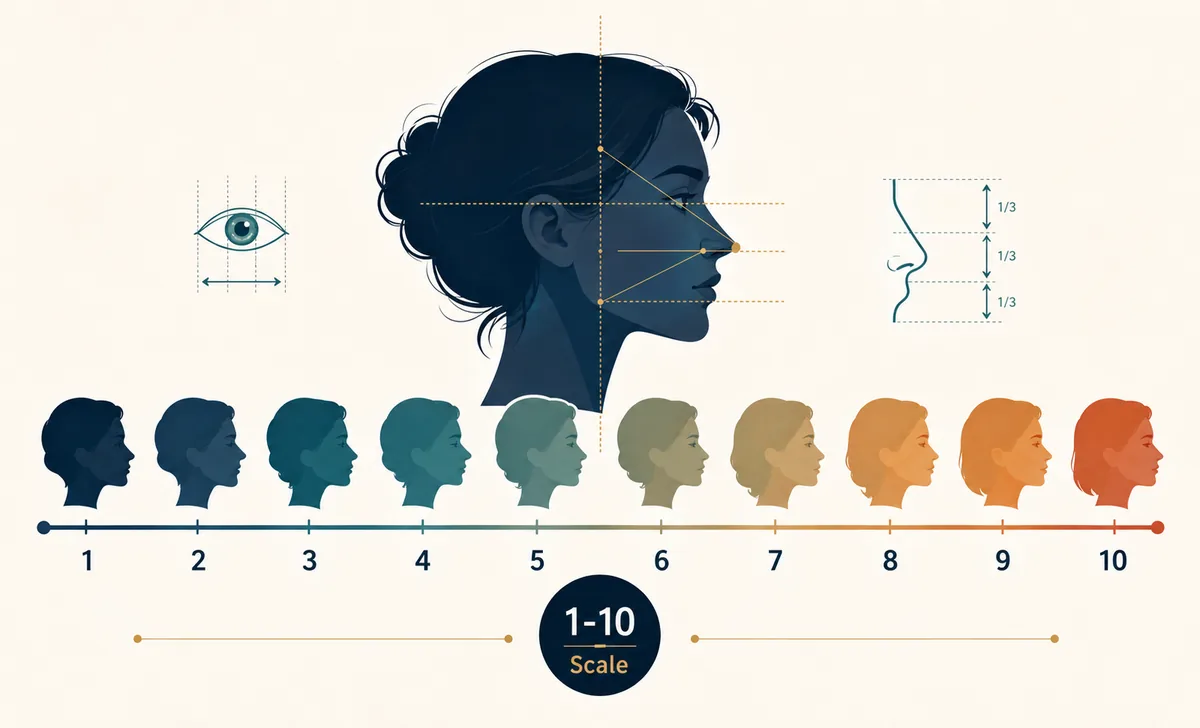
魅力度スケールとは、顔や写真がどう見えるかを1〜10などの数字にまとめる方法です。高い点数は、その画像がより明るく、整っていて、バランスよく見えると判断されたことを示します。
Written By
Clara Vale
ただし点数は永続的なラベルではありません。照明、カメラ距離、角度、表情、身だしなみ、画質によって結果は変わります。似た条件の写真を比べて傾向を見るために使いましょう。
Editorial Note
Published on 2026-06-24. This localized guide explains attractiveness scale and beauty score interpretation for ja readers with the same search intent.
先に結論
魅力度スケールとは、顔や写真がどう見えるかを1〜10などの数字にまとめる方法です。高い点数は、その画像がより明るく、整っていて、バランスよく見えると判断されたことを示します。
ただし点数は永続的なラベルではありません。照明、カメラ距離、角度、表情、身だしなみ、画質によって結果は変わります。似た条件の写真を比べて傾向を見るために使いましょう。
魅力度スケールが実際に測るもの
魅力度スケールは、左右対称性、比率、写真の見やすさ、表情、スタイル、評価システムの好みをひとつの数字に圧縮します。
同じ写真でもツールによって点数が違うのは、重視する要素が異なるからです。人は雰囲気や親しみやすさにも反応し、AIは主に画像上の特徴点や明暗を読みます。
この数字は写真を理解するための手がかりです。人そのものを決めるものではありません。
顔評価に含まれやすい要素
- 見える顔のバランス: 目、鼻、唇、あごの間隔が印象を変えます。
- 左右対称性: 中央に収まった顔は安定して読まれます。
- 写真の見せ方: 光、切り抜き、距離で点数が変わります。
- スタイルと表情: 髪、身だしなみ、自然な表情も影響します。
- 評価側の偏り: 人もAIも好みや学習データの影響を受けます。
AI美容スコアと顔評価の仕組み
AIの顔評価ツールは顔を検出し、特徴点を推定し、見える情報を点数や説明に変換します。
入力は静止画なので、結果は基本的に写真の点数です。声、動き、会話の印象、自信、個性は測れません。
複数の似た写真を比べ、どの写真条件で点が変わるかを見ると実用的です。
For a broader scientific background on why facial beauty discussions often mention symmetry, averageness, and sexually dimorphic cues, this Annual Reviews overview of facial beauty is useful context. For a general overview of appearance-related attractiveness concepts, Wikipedia’s physical attractiveness article.
| 尺度の種類 | よくある意味 | おすすめ用途 |
|---|---|---|
| 1-10 attractiveness scale | A quick human-style rating that compresses many visual signals into one number. | Use it as a rough summary, not a precise measurement of personal worth. |
| AI beauty score | A model output based on visible landmarks, photo quality, symmetry cues, and learned patterns. | Useful for comparing photos when the input conditions stay similar. |
| PSL or looks scale | A more internet-specific rating vocabulary often used in appearance forums. | Read it carefully because it can become harsh or overly rigid. |
| Photo attractiveness rating | A score for one image rather than a stable score for the whole person. | The most practical use is choosing better profile or social photos. |
1〜10点の範囲をどう読むか
1〜10点は正確に見えますが、細かい小数より範囲で読む方が安全です。光や切り抜きが変われば小さな差は意味を持ちにくくなります。
多くの写真は5〜7に集まります。顔は読めるが、照明や構図が最適ではない場合が多いからです。
高い点数は、顔が中央にあり、光が均一で、目元や輪郭が読みやすく、歪みが少ない写真で出やすくなります。
| 変数 | 点数への影響 | より良い方法 |
|---|---|---|
| Lighting | Harsh shadows can hide facial landmarks and make symmetry look worse. | Use soft front light or bright indirect daylight. |
| Camera distance | A very close lens can enlarge the nose and midface while shrinking the sides of the face. | Step back slightly and crop the photo after taking it. |
| Head angle | Tilted or rotated faces are harder for AI and people to compare fairly. | Test one neutral front-facing image before testing stylized angles. |
| Expression | A tense expression can reduce perceived warmth and facial harmony. | Compare a neutral expression with a natural relaxed smile. |
| Filters and editing | Heavy smoothing or distortion may make the model read the face less reliably. | Use clear photos with minimal filters for the baseline score. |
写真ごとに点数が変わる理由
同じ人でも写真が変われば点数は変わります。近すぎる自撮りは顔の中央を大きく見せ、低いカメラはあご周りを変え、横からの強い光は影を増やします。
人間の印象も同じ要素で変わります。自然な表情、きれいな光、落ち着いた構図は顔をより調和して見せます。
比較するときは、正面の自然な写真と、現実的に整えたプロフィール写真を比べましょう。
| 範囲 | 典型的な読み方 | より良い問い |
|---|---|---|
| 1-3 | Usually means the uploaded photo has severe quality problems or the model is reading weak visible signals. | Is the image dark, cropped, blurred, distorted, or blocked? |
| 4-5 | A lower-to-average result in that specific photo, often sensitive to lighting and expression. | Would a cleaner front-facing portrait change the result? |
| 6-7 | A generally positive score with readable facial structure and decent photo presentation. | Which photo variables could make the face read more clearly? |
| 8-10 | A high score for the image, usually reflecting strong clarity, balance, and presentation. | Is the score stable across several realistic photos? |
美容スコアを考えすぎず使う方法
美容スコアは画像フィードバックとして使うのが健全です。改善点は光、構図、歪み、表情、写真選びです。
別々のツールの点数を同じ基準として比べないでください。ツールやコミュニティごとに尺度が違います。
実際の魅力には、姿勢、声、動き、スタイル、性格、場の雰囲気も含まれます。
より健全な読み方
- 明るい基準写真を使う: 均一な光、正面、少ないフィルターから始めます。
- 似た写真を比べる: 一度に変える要素は一つにします。
- 傾向を見る: 一回の点数より繰り返す傾向が大切です。
- 説明を読む: 写真品質の指摘は数字より役立つことがあります。
- 距離を置く: 画像フィードバックとして扱いましょう。
魅力度スケールとPSL・hotness test・beauty ratingの違い
Attractiveness scale、beauty score、face rating、hotness test、PSL score は近い言葉ですが同じではありません。
このページは点数の読み方、トップページはテスト実行、Face Rating AI は写真比較、PSLガイドは厳しめのネット用語を扱います。
すぐ点数を見たい場合は無料テストを使い、点数差を理解したい場合は光、角度、切り抜き、明瞭さを確認しましょう。

目的別のおすすめページ
- すぐ点数を見たい: 無料の魅力度テストを使います。
- プロフィール写真を比べたい: Face Rating AIを使います。
- PSL用語を知りたい: PSL Score Guideを読みます。
- 比率を知りたい: Facial HarmonyとCanthal Tiltを読みます。
魅力度スケールのFAQ
スケールを理解したら写真を試してみましょう
魅力度スケールとは、顔や写真がどう見えるかを1〜10などの数字にまとめる方法です。高い点数は、その画像がより明るく、整っていて、バランスよく見えると判断されたことを示します。
ただし点数は永続的なラベルではありません。照明、カメラ距離、角度、表情、身だしなみ、画質によって結果は変わります。似た条件の写真を比べて傾向を見るために使いましょう。
References and context
- Rhodes, G. (2006). The Evolutionary Psychology of Facial Beauty. Annual Review of Psychology.
- General background: physical attractiveness, symmetry, averageness, and cultural variation.